Vertigo can make an ordinary moment feel suddenly unsafe, especially when the room seems to spin after turning in bed, looking up, or bending down. For many people, this strange spinning feeling is linked to tiny calcium particles in the inner ear that have moved out of place. The discomfort can feel frightening, even when the cause is often manageable with the right guidance. The surprising part is that one of the most helpful approaches is not a pill, but a careful movement routine that works with gravity, and the key detail most people miss comes near the end of this guide.

What Are Inner Ear Crystals?
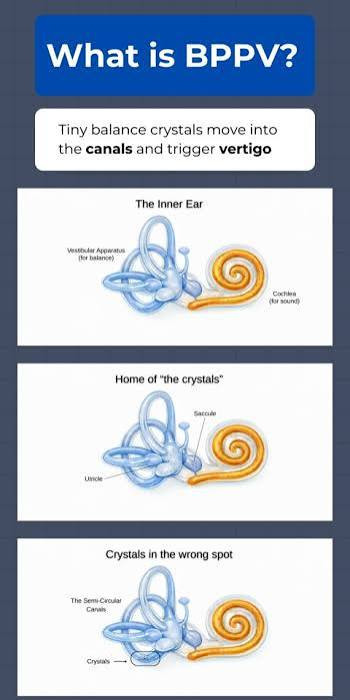
Inside your inner ear are tiny calcium particles often called ear crystals. Their medical name is otoconia.
These crystals normally sit in a part of the inner ear that helps your brain understand head position and movement. When they stay where they belong, they quietly support your balance every day.
But here is where things get interesting.
Sometimes these crystals move into the semicircular canals, which are fluid filled balance tubes. When that happens, your brain may receive confusing motion signals. You may feel like the room is spinning even when you are still.
This is commonly associated with benign paroxysmal positional vertigo, often called BPPV.
Why Vertigo Can Feel So Sudden
BPPV related vertigo often appears during simple head movements. It may happen when you roll over in bed, tilt your head back, bend forward, or sit up quickly.
The spinning feeling may last seconds to a minute, but the fear and nausea can linger longer.
Common sensations may include:
• A spinning or tilting feeling
• Lightheadedness after changing position
• Nausea or stomach discomfort
• Unsteady walking for a short time
• A feeling that your eyes cannot settle
The truth is, vertigo can feel dramatic because balance depends on several systems working together. Your inner ear, eyes, muscles, joints, and brain all need to agree on where your body is in space.
When one system sends mixed signals, your body notices immediately.
Inner Ear Crystals Are Not Dirt, Wax, or Toxins
This is important.
Inner ear crystals are not something you can remove with ear drops, cotton swabs, oils, or home ear cleaning. They are deep inside the balance system, not in the outer ear canal.
That means putting anything into the ear will not reach them.
A safer way to think about it is this: the goal is not to clean the ear. The goal is to help guide the misplaced particles back toward an area where they are less likely to trigger spinning.
That is why specific head and body movements are often recommended by clinicians.
The Main Movement Method Often Used for BPPV
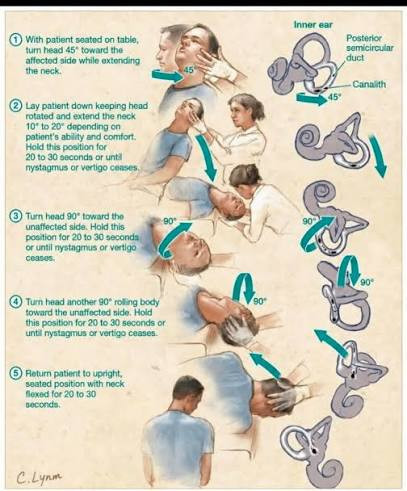
One of the best known movement routines is the Epley maneuver. It is a type of canalith repositioning movement.
In simple language, it uses a sequence of head turns and body positions to help move the crystals through the inner ear canal using gravity.
But that does not mean everyone should try it blindly.
The affected side matters. Neck problems matter. Back problems matter. A history of stroke, fainting, severe imbalance, or new neurological symptoms matters.
So, before trying at home, it is wise to speak with a healthcare professional, physical therapist, or vestibular specialist if symptoms are new, severe, unusual, or recurring.
A Gentle Step by Step Approach to Discuss With a Professional
If a healthcare professional has told you your symptoms fit BPPV and has shown you which side is affected, a home version of a repositioning routine may be recommended.
Here is a general educational example of how many Epley style routines are structured:
- Sit upright on a bed with your legs extended or with a pillow placed behind your shoulders.
- Turn your head about 45 degrees toward the side that tends to trigger symptoms.
- Lie back carefully so your head is slightly extended over the pillow, while keeping your head turned.
- Stay in that position for about 30 seconds, or until the spinning settles.
- Turn your head slowly toward the opposite side and hold again.
- Roll your body gently onto that side while your head follows the movement.
- After another pause, slowly return to sitting.
The important word here is slowly.
Rushing may make symptoms feel stronger. It is also helpful to have someone nearby the first time, especially for older adults or anyone who feels unsteady.
What to Do Right After a Vertigo Episode
The minutes after vertigo matter because your body may still feel unsettled.
Try this simple recovery routine:
• Sit still and keep your eyes focused on one stable object
• Breathe slowly through your nose and relax your shoulders
• Avoid bending, driving, climbing, or showering alone until steadier
• Sip water if nausea is mild and you can swallow comfortably
• Move in stages instead of jumping back into activity
But that is not all.
If vertigo happens in the morning, give yourself extra time before standing. Sit on the edge of the bed first. Let your eyes and balance system adjust.
This small habit can reduce the chance of stumbling.
Helpful Daily Habits That Support Balance Confidence
BPPV is not usually caused by poor lifestyle choices, but certain habits can make daily life safer while symptoms are active.
Move Your Head With Awareness
Avoid quick head snaps when symptoms are flaring. Turn your whole body instead of twisting your neck suddenly.
This does not mean you should freeze your movement all day. Gentle normal movement is often helpful once the spinning settles.
Make Your Bedroom Safer
Vertigo often appears when rolling in bed or getting up.
Consider these simple changes:
• Keep a lamp within reach
• Remove loose rugs near the bed
• Place shoes or slippers where you can step into them easily
• Sit before standing
• Avoid reaching upward immediately after waking
These are not dramatic changes, but they can make a big difference in confidence.
Notice Your Triggers
Many people can identify a pattern.
Common triggers include:
• Rolling to one side in bed
• Looking up at a shelf
• Bending to tie shoes
• Tilting the head back at a salon sink
• Sudden position changes during exercise
Writing down the movement that starts the spinning can help a clinician identify which canal or side may be involved.
What Not to Do for Inner Ear Crystals
Some online advice sounds simple, but not all of it is safe or useful.
Avoid these common mistakes:
• Do not put oils, alcohol, peroxide, or herbal liquids into the ear for vertigo crystals
• Do not use cotton swabs deeply in the ear canal
• Do not keep repeating head maneuvers aggressively if symptoms become severe
• Do not ignore new hearing loss, weakness, speech changes, or chest pain
• Do not assume every dizzy spell is caused by ear crystals
Here is the key point.
BPPV is common, but vertigo has many possible causes. Some are related to the inner ear. Others may involve migraine, medication effects, blood pressure changes, infection, or neurological concerns.
When Vertigo Needs Medical Attention Quickly
Most mild positional vertigo episodes are not emergencies, but certain symptoms should never be brushed aside.
Seek urgent medical care if vertigo comes with:
• Trouble speaking
• Facial drooping
• New weakness or numbness
• Double vision or sudden vision loss
• Severe headache unlike usual headaches
• Chest pain or fainting
• Trouble walking straight
• New hearing loss
• Fever, stiff neck, or severe ear pain
These signs may point to something more serious than simple inner ear crystal movement.
A Simple Comparison: Ear Crystal Vertigo vs Other Dizziness
| Feature | BPPV Like Pattern | Other Causes May Be Possible |
|---|---|---|
| Main feeling | Brief spinning with head position change | Lightheadedness, faintness, constant imbalance |
| Common trigger | Rolling in bed, looking up, bending | Standing quickly, dehydration, medication, illness |
| Duration | Often seconds to about a minute | May last longer or fluctuate |
| Hearing changes | Usually no major hearing loss | Hearing loss or ringing may suggest another ear issue |
| Best next step | Professional assessment and guided repositioning | Medical review based on symptoms |
This table is not for self diagnosis. It simply helps you notice patterns before talking with a professional.
Can Food or Supplements Clear Inner Ear Crystals?
This is where many readers expect a secret ingredient.
There is no proven food, drink, tea, or ear drop that directly clears misplaced inner ear crystals.
However, your body does need good general support for balance, muscles, hydration, and bone health. Some research has explored the relationship between vitamin D status and BPPV recurrence, especially in people who are deficient.
That does not mean everyone should take supplements. It means it may be reasonable to ask your clinician whether checking vitamin D is appropriate, especially if vertigo keeps returning.
Simple supportive habits include:
• Drink enough water during the day
• Eat balanced meals with protein, vegetables, fruits, and calcium rich foods
• Avoid skipping meals if dizziness worsens when you are hungry
• Limit alcohol during active vertigo periods because it may worsen balance
• Review medications with a pharmacist or clinician if dizziness started after a new prescription
The most useful “ingredient” may actually be information: knowing whether your vertigo truly fits BPPV and which side is involved.
The Small Detail Many People Miss
Here is the part worth remembering.
The same movement routine may not work the same way for everyone because BPPV can involve different canals and different sides of the inner ear.
That is why watching a random video and guessing can sometimes lead to frustration. A clinician may use eye movement patterns and position tests to better understand what is happening.
Once the correct pattern is identified, the right movement can be much more targeted.
In other words, the secret is not doing more movements. The secret is doing the right movement for the right type of positional vertigo.
How to Talk to a Healthcare Professional About Vertigo
To make your appointment more useful, bring clear details.
You can write down:
- When the vertigo started
- What movement triggers it
- How long the spinning lasts
- Whether you have nausea, hearing changes, headache, or weakness
- Any new medications or recent illness
- Whether you recently had a fall, head injury, or dental procedure
- Which side seems worse when rolling in bed
These notes can help your provider decide whether BPPV is likely or whether another cause should be checked.
A Calm At Home Plan for the Next Few Days
If your symptoms are mild, positional, and already evaluated as BPPV, a practical plan may look like this:
Day 1: Move carefully, avoid risky activities, and write down your triggers.
Day 2: Follow only the movement routine recommended by your clinician or therapist.
Day 3: Notice whether the spinning is shorter, less intense, or less frequent.
Day 4: Return gradually to normal movement while keeping safety habits in place.
Day 5: Contact a professional if symptoms persist, worsen, or feel different.
This approach keeps you from panicking, but it also prevents the common mistake of ignoring symptoms that need review.
Final Thoughts
Inner ear crystals can create a spinning sensation that feels much bigger than the tiny particles causing it. The good news is that many BPPV related symptoms may improve with the right repositioning movements, careful daily habits, and professional guidance when needed.
The safest path is not to “clean” the ear, force the body, or chase miracle remedies. It is to understand the pattern, move slowly, use the correct technique, and know when to ask for help.
Vertigo can feel scary, but with the right information, many people feel more in control again.
FAQ
What helps inner ear crystals move back into place?
Specific repositioning movements, such as Epley style maneuvers, are often used to guide misplaced crystals using gravity. It is best to learn the correct side and technique from a healthcare professional.
Can inner ear crystals go away on their own?
Some positional vertigo episodes may improve over time, but symptoms can return. If vertigo is new, severe, frequent, or affecting walking and daily life, medical guidance is recommended.
Should I put anything in my ear to clear crystals?
No. Inner ear crystals are not in the outer ear canal, so drops, oils, cotton swabs, or ear cleaning methods do not reach them and may cause irritation or injury.
Disclaimer: This article is for general educational purposes only and does not replace medical advice, diagnosis, or care from a qualified healthcare professional.